
 Flint's Woodshop
 Our Water-Cooled Sanding Table
Sanding makes heat. Run a belt fast, lean on the work or step up to fine grits, and friction can scorch the wood and wear out the sandpaper early. Daniel Flint designed and built this table to pull that heat out where it starts: chilled water runs through an aluminum plate directly under the sanding belt. The design is patent pending.
How It Works
- A small refrigeration system chills a 25-gallon tank of water. A compressor, an evaporator coil sitting in the water and a condensing coil with a fan outside the tank work the same way a refrigerator does.
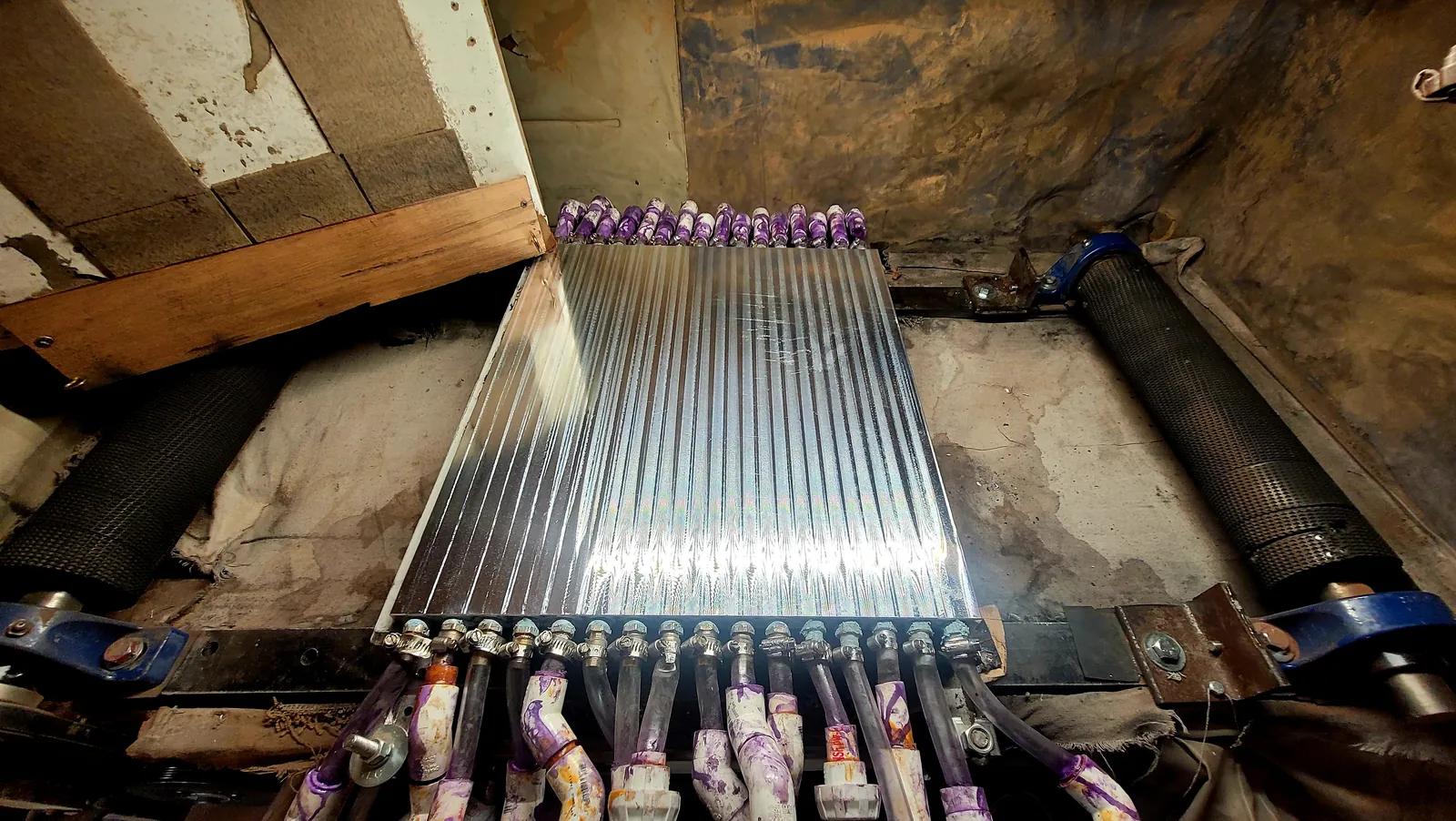
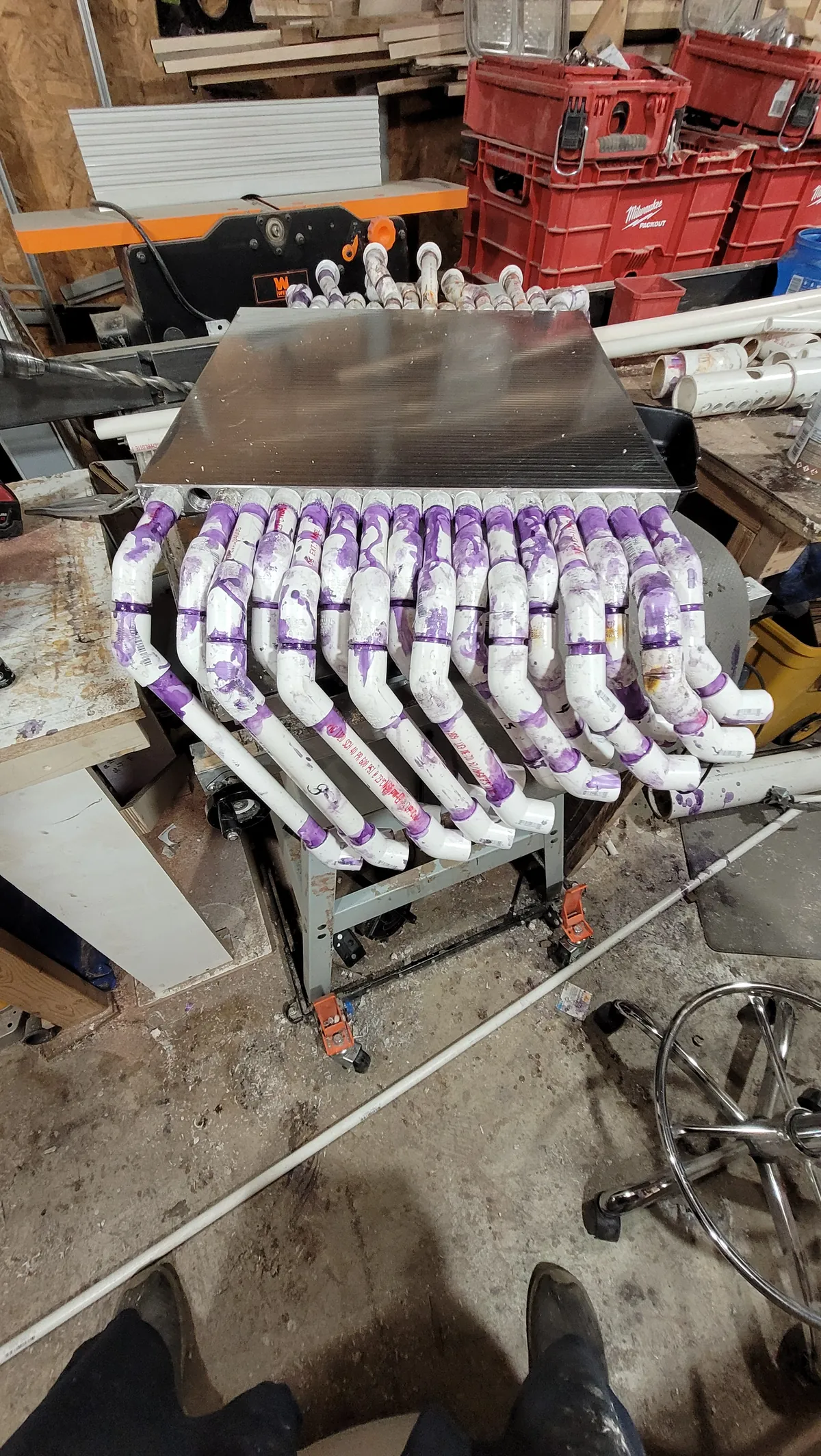
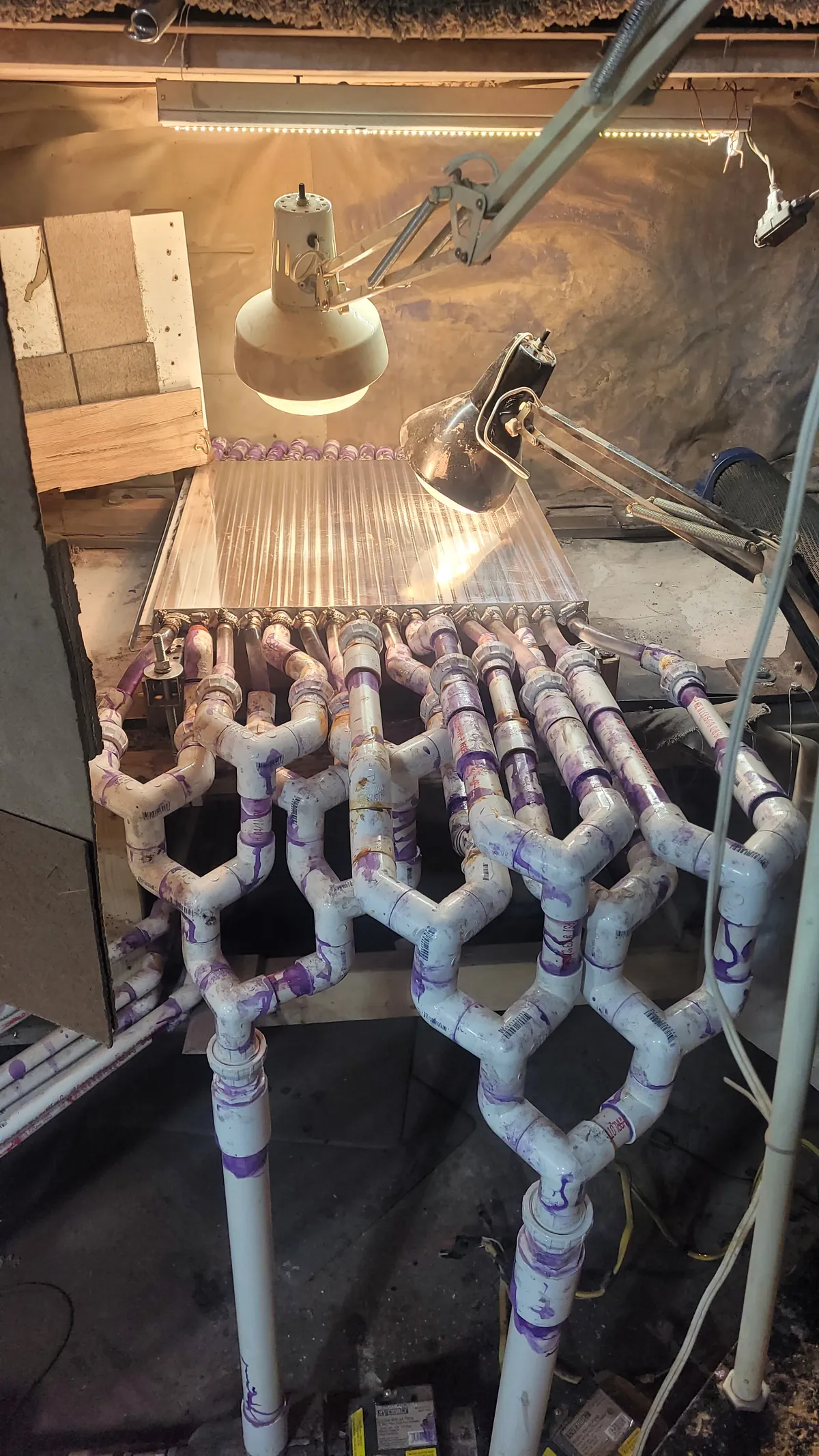
- A pump sends the chilled water through an aluminum plate that sits directly under the sanding belt. The plate is 18 inches square, with 16 water passages drilled through it.
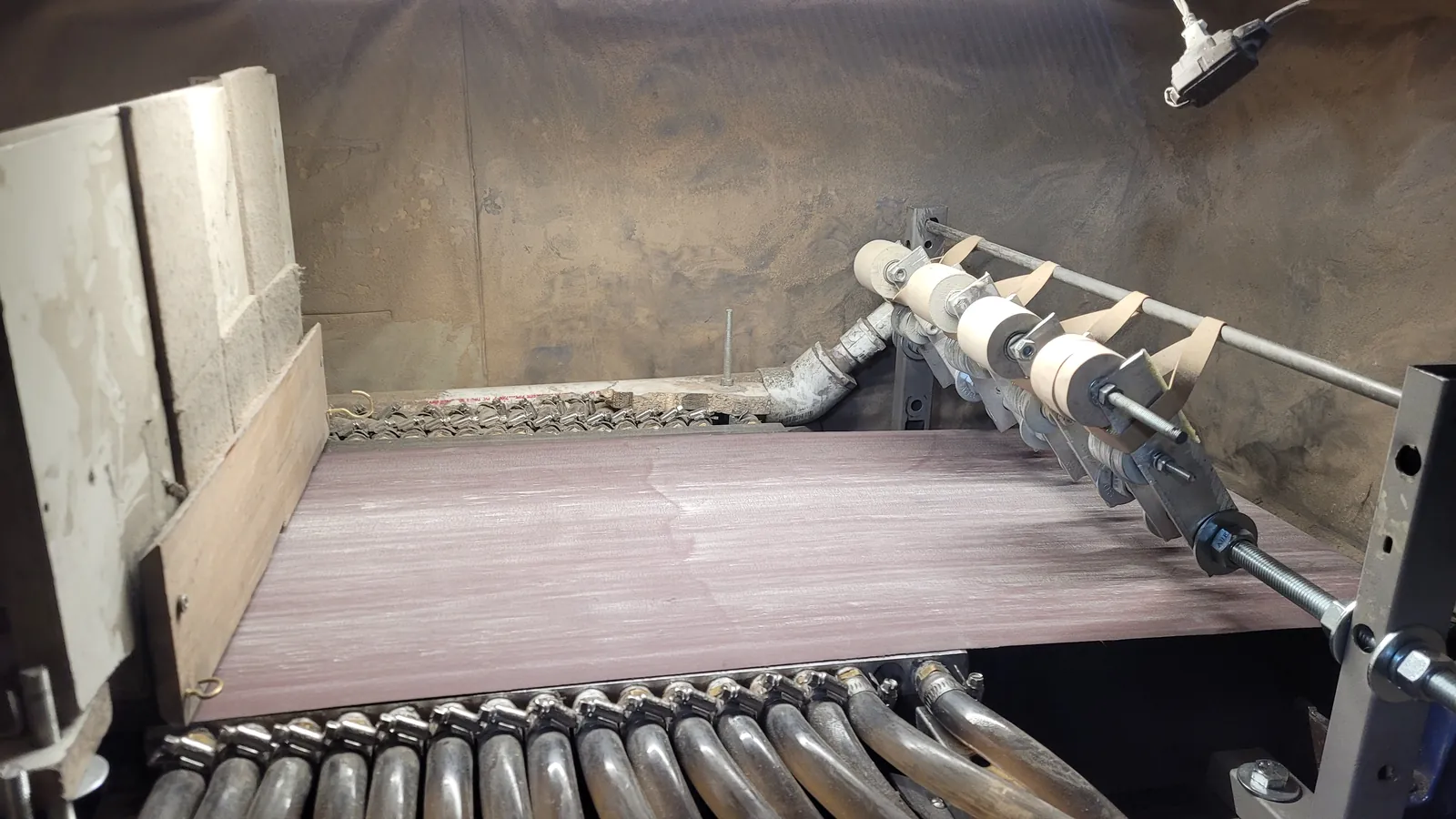
- The wood is sanded on the belt, right over that cold plate. Heat from the sanding passes through the belt into the aluminum, into the water, and back to the tank to be chilled again. A valve on the return line sets the flow.
- The motor runs through a variable frequency drive, so the belt speed can be adjusted, and the whole machine runs from a standard 220V outlet.
- Guide wheels keep the belt centered, a hinged fence guides the work, and an enclosure with two half-doors keeps the dust in.
Why Cool the Sanding?
Heat is what burns wood and dulls sandpaper. Take it away and you get a better finish, sandpaper that lasts longer, and room to sand faster without damaging the piece.
We use the table in the shop on end-grain cutting boards and on the hardwood urns we make for Laser Engraved Urns.
The Heat Gets Reused
The heat pulled out of the sanding has to go somewhere. It leaves through the condensing coil as warm air, over 118°F, and an attachment can send that air into a building’s heating ducts to help warm the shop or a home. That is the “room heater attachment” in the patent application’s title.
Built, Rebuilt and Built Again
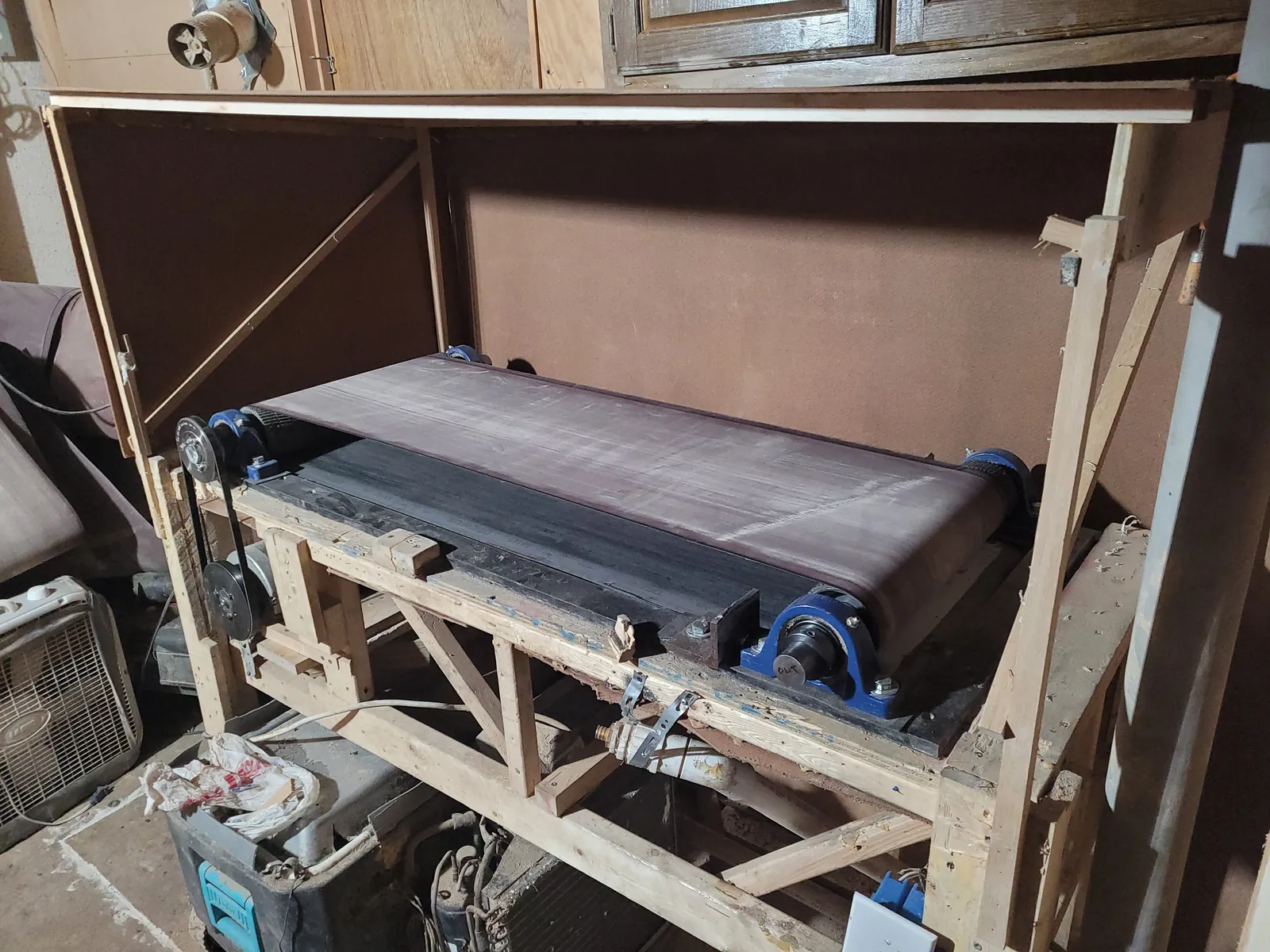
The table has been through many versions. These photos show a few of them, from an early wood frame to the aluminum cooling plate with 16 separate water passages.
See It Running
A close look at the table running, with the cooling at work while it sands.
An end-grain cutting board being sanded on the table.
Patent Pending
The U.S. Patent and Trademark Office published the application on September 18, 2025, as US 2025/0289092 A1, Water Cooled Sanding Table with Room Heater Attachment. You can read it on Google Patents.